Showing posts with label Birding. Show all posts

Tarifa Autumn Tour – Day 7 Medina Sedonia A381 road and La Janda

Thurs 10 Sep 2015

As this was our last day we decided to have a bit of a lie-in. I wandered around the hotel gardens at about 8ish and found chiffchaff, stonechat, spotless starling, chaffinch, Sardinian warbler and heard a wren. The usual gang of house sparrows accompanied us for breakfast.

The Mediterranean was shrouded in fog this morning, so our morning pelagic trip was postponed to the afternoon by the operators. Instead we set off towards Medina to find white-rumped swifts, but had to return when David realised he had left his ‘bins at the breakfast table! Once back on track we stopped for a third and final time at the quarry by the Montenmedio golf course. We still did not find the eagle owl, but in the trees by the car we found wryneck, common whitethroat and a pied flycatcher.

We left for the long drive to Medina-Sedonia, where white-rumped swifts were known to be nesting under bridges on the A381 Algeciras–Jerez road around Km60. We did not know the exact location, but we found several likely looking spots. We drove up and down the old road beside the motorway searching, but we never found any. Unfortunately we managed to hit and kill a Sardinian warbler that flew directly in front of the car as cruised up and down. As we stood and ate our lunches the usual cast of raptors passed over, including a single Egyptian vulture. Red-rumped swallow in good numbers too.

We gave up on the white-rumped swifts and headed for a second visit to La Janda. The red-necked nightjar were worth a second look, but neither David nor I managed to find any! We had to wait for Bob to point out the three he had found.

We only managed to get a distant view of a single, perched black-winged kite on our previous visit, but this time we saw three much closer. Two of them were hunting, treating us to a display of their hovering and dropping with the wings held in a high V. One of the most memorable sightings of this trip.

As it was now so late in the afternoon we decided to cancel our pelagic trip and head back to the hotel. We decided to have one last look for the common bulbuls in Tarifa. This time their noisy calls indicated that they were around, but we never managed to see them in the half hour we spent in the car park!

That concluded our birding trip, as tomorrow we had to leave early the next morning to catch our early flight from Malaga to Birmingham.

Bob's Day 7 Blog

Click here for the complete species list.

Tarifa Autumn Tour – Day 6 Ojan Valley, Barbate Marshes and Sierra de la Plata

Wed 9 Sep 2015

We began our day with another early morning visit to Los Lances beach. There seemed to be more birds about today. Quite a few Audouin’s gulls were in front of the hide along with bar-tailed godwits, dunlin, sanderling and a couple of greater flamingos. Scanning further along the beach we found Kentish and ringed plovers, grey heron and little egret. Some black kite flew over and a couple landed on the beach. We continued along the full length of the board walk and then circled back. Cattle egret were in the field with livestock along with lots of corn bunting, a couple of yellow wagtails and a hunting kestrel. We saw three species of lark – skylark, crested and greater short-toed. As we slowly made our way back to the car we found zitting cisticola, stonechat, goldfinch and house sparrow and many bee-eaters overhead. Finally, near the car, both common and spotless starlings.

After returning to the hotel for breakfast we headed off to the Trafico/Punta Camorro headland for some more raptor watching. A flock of eight black storks flew over just as we arrived and then a steady stream of booted and short-toed eagles. The odd black kite and a solitary sparrowhawk showed. Nothing new to see so Bob suggested we head inland to the Ojan Valley.

As we turned onto the road into the valley we slowed to watch a short-toed eagle flying low over the fields. A bit further on we reversed back as we thought we had passed a tawny pipit sat on the fence, but it turned out to be a crested lark! A couple of kilometres into the valley we pulled off the road by a small stream to check a small colony of monarch butterflies. Numerous swifts and hirundines were about. We logged common, pallid and alpine swift, barn and red-rumped swallow, and house martin. We heard a Cetti’s warbler and the calls of bee-eaters as they passed over.

We drove on through a landscape dominated by dozens (if not hundreds) of wind turbines to the Embalse (reservoir) Almodovar, where on a rough track we dug out the chairs from the boot and sat and ate a picnic lunch. Bob told us to check out the surrounding mountain ridges for Bonelli’s eagle, but we were not lucky enough to spot any. The huge reservoir held yellow and white wagtails, grey heron, mallard and cattle egret. Mostly griffon vultures passing over, but the occasional short-toed eagle and honey buzzard. We watched aghast as a griffon vulture flew right through the arc of a huge wind turbine. It was not hit by the blade, but the air turbulence almost turned this enormous bird upside down.

Our next destination was the Barbate Marshes, a large area of shallow lagoons near the coast. We drove around these on the rough track, stopping at various spots to scan the lagoons with our ‘scopes. There was plenty to see, including some new species for our list. David found a stone curlew, and an osprey flew over. A good count of 49 spoonbill and 46 Audouin’s gull. A great white egret was apparently unusual for this spot. A long list of waders consisted of redshank, greenshank, black-winged stilt, dunlin, knot, sanderling, curlew sandpiper, ringed plover, Kentish plover, grey plover and avocet. As well as the Audouin’s there were also yellow-legged and lesser black-backed gulls.

We moved on to the bridge over the River Barbate in hope of finding Caspian terns. We did not find any of these, but better there were a couple of Lesser crested terns, a rare annual vagrant from Africa. They perched on posts on the far side of the river along with Sandwich terns, so we never managed to get a good close view.

Finally we drove to the coastal town of Bolonia and headed up to the mirador (view point) 300m up in the Sierra de la Plata. The view to the beach at Bolonia and over the Med to Morocco was quite spectacular. We settled down in the hope of seeing white-rumped swifts. The antics of the breeding griffon vultures high on the crags above us fascinated us while we waited for the swifts to show, and a lone blue rock thrush showed for a while. It goes without saying that the skies above had many passing raptors (honey buzzard, booted eagle, black kite) and dozens more bee-eaters. Sadly, the swifts did not show up.

We had dinner at a restaurant frequented by the Tarifa surfing crowd – the three of us were probably more than twice the age of any of the other clientele!

Bob's Day 6 Blog

Tarifa Autumn Tour – Day 5 Encinas Borrachas Track and Sierra de las Nieves

Tue 8 Sep 2015

We did not do any early morning excursion today as we were foregoing breakfast in the hotel and making the long drive to Gaucin to pick up Lis who was joining us for the day. As we prepared to set off I heard the deep oo-hu call of an eagle owl from somewhere on the hillside above the hotel, but sadly it was too dark to have any chance of locating it.

After the long drive we breakfasted at a cafe in Gaucin before picking up Lis. The mountain scenery was quite spectacular as we set off as a temperature inversion had filled the valleys with fog.

Our first stop was in a layby near the village of Atajate. Linnet, red-legged partridge and stonechat seemed insignificant compared to the blue rock thrushes we found here. Bob had a fleeting glimpse of a rock thrush, but it had disappeared before any of the rest of us manage to connect with it.

We parked the car at the start of the Encinas Borrachas track and set off for a walk along it. By the farm buildings we soon found goldfinch, stonechat, Thekla lark and a family party of black-eared wheatears. David spotted a bird perched on a pylon which proved to be a wryneck – an odd tick for this treeless heathland habitat. A spectacled warbler briefly showed, so we hung around for a while until we managed to get a better view of it. As we moved on we added both southern grey and woodchat shrikes.

A few raptors began to appear over the high ridge to our left. All the usual species – griffon vulture, booted and short-toed eagles and also a solitary Montagu’s harrier. Small  groups of honey buzzard lazily drifted across heading south as well. We counted over a hundred of them. With our scopes we located several Spanish ibex high up on the crags. On retracing our steps back to the car we added swallow, swift, great tit, redstart and both black and northern wheatears.

We drove a short distance to a restaurant (Pension El Navasillo) set on a high mountain road. Eyes to the skies as we ate our lunch counting the raptors cruising over – short-toed eagle 6, black kite 6, booted eagle 5, honey buzzard 57, Egyptian vulture 1, griffon vulture ?. Good numbers of bee-eaters passed over as well, but the loose flocks were impossible to count.

After lunch we headed for the Sierra de las Nieves Natural Park. The picnic area near the entrance was quiet. The most notable of the few species seen were redstart and woodlark. Further into the park we found a mixed feeding flock which included willow, Bonelli’s and Orphean warblers, blue and crested tits and a firecrest. Higher up on the track we found mistle thrush, spotted flycatcher, black wheatear, goldfinch and both common and black redstart. We logged raven high up on the ridges and griffon vulture and another 30 honey buzzards. Returning back down Bob spotted a couple of rock buntings flying up from the track, but although we searched for them, we never located them again.

On the way back to Gaucin we stopped off at the Cueva (cave) de Gato with the hope of seeing dipper and wagtail around the clear, blue pool. No chance of this though as kids and dogs splashing around in the water had frightened any bird life away. A walk by the Rio Guadiaro produced very little other than the song of a Cetti’s warbler.

We returned to Bob’s house in Gaucin where a delicious evening meal was prepared for us by Bob’s wife, Dawn.

Bob's Day 5 Blog

Tarifa Autumn Tour – Day 4 Bonanza Salt Pans and Chipiona

Mon 7 Sep 2015

We drove to Tarifa for this morning’s pre-breakfast excursion. On the beach we found sanderling, dunlin and turnstone. We wandered along the causeway towards Tarifa island looking out to sea and managed to get good views of a couple of shearwater species – Cory’s and Balearic. Lesser kestrel and a hoopoe were over the island, but we did not walk that far as the wind was quite chilly. Back at the beach we added yellow-legged gull, sandwich tern, ringed plover, and bar-tailed godwit. Before returning for breakfast we had another quick look in town for the bulbuls, again without any luck.

After breakfast we drove west heading for the Bonanza Salt Pans. We called in again for a brief visit to the Montenmedio Golf Club. Still no luck with the eagle owl, but we ticked alpine swift and jackdaw.

A few small lagunas at Sanlucar de Barameda were well worth a visit as they held lots of interesting birds. Most notably marbled and white-headed ducks, both rarities (counts of 18 and 14 respectively). Others were squacco heron, little egret, purple swamphen, glossy ibis, common and red-crested pochard, gadwall, shoveller, little grebe, coot and moorhen. One other interesting spot was a common waxbill, an introduced African species that now breeds successfully in southern Spain.

The Bonanza salt pans is a great birding spot holding large flocks of flamingos, avocets and black-tailed godwit and hundreds of other birds. Too many to list them all, but new ones for our list included curlew, avocet, ruff, greenshank, curlew sandpiper, little tern, black-necked grebe and curlew sandpiper. While we stood by the car eating our lunch we also saw a red kite and an osprey.

We had to move on and stopped briefly at the nearby Laguna Tarelo. This was very quiet, but we did spot a couple of nigh herons, along with marbled and white-headed ducks. A drive through Algaida Pine woods was fruitless. A quick excursion out of the car before we were driven back by annoying insects produced just spotted flycatcher and Sardinian warbler.

Our final port-of-call for today was the coastal town of Chipiona. As we sat eating ice-creams there were very few birds about. Yellow-legged and lesser black-backed gulls on the beach and a lone gannet out at sea. House sparrow, swallow and house martin were the only other species around. We stationed ourselves next to a warehouse where our target species were known to roost. We had a long boring wait with nothing much to see, but then in the distance a small bird approached. As it neared we were able to identify it as our target species – Little Swift. After a quick fly around it darted into its nest under the eaves of the building never to be seen again! It was a further 20 minutes before another showed up, but then they started to arrive in numbers and treat us to an aerial display. We counted a maximum of 13 of them in the air together. A superb end to the day.

Dinner was pizza at a sea front restaurant in Tarifa. Watching the Morocco ferry port we decided to that we would go on a pelagic trip from here on Thursday.

Bob's Day 4 Blog

Tarifa Autumn Tour – Day 3 Huerta Grande and Castillo de Castellar

Sun 6 Sep 2015

For our pre-breakfast walk we simply crossed the road to Los Lances beach. It was till too dark to see anything in the stone pine woodland behind the beach so we headed straight out onto the sand. Not a great deal about – just yellow-legged gull and sandwich tern. Wandering around the grounds of a hotel we spotted crested lark, feral pigeon, collared dove, house sparrows and linnet. We glimpsed a small brightly coloured parrot which we tried to follow around the hotel grounds. We eventually caught up with a small group of these, which turned out to be Love Birds (escaped cage birds). We had another look in the pine trees before returning for breakfast, managing to locate spotted flycatcher and short-toed treecreeper.

After breakfast we headed towards Jimena de la Frontera. We made an unplanned stop at a local privately owned nature reserve, Huerta Grande, where we had a guided tour by the proprietor. We spent 20 minutes in a hide overlooking a small pond and surrounded by feeders. We logged lots of serins and blue tit, great tit, common whitethroat, chaffinch, house sparrow, blackcap, garden warbler and collared dove.

As we chatted to the owner prior to departing a good raptor passage began to develop overhead. Booted eagles, short-toed eagles, griffon vulture and dozens of honey buzzard. We decided to go back to the Cazalla Observatory near Tarifa, but there were probably more bird watchers there than migrating birds!

Giving up on the raptor watch point we resumed our journey towards Jimena, stopping to eat lunch by the Rio Hozgargante. This sadly turned out to be rather disappointing as the river had almost completely dried up. Walking along the river bed we eventually came to a little water where we found Sardinian warbler, blue tit, nightingale, robin, blackbird, goldfinch and blackcap. A couple of griffon vulture passed over. We found evidence here of bird trapping. We spoke to an English lady who lived locally who told us that the authorities did very little to stop this illegal practice.

Next we drove the length of the Marchenilla Track. This proved a bit more interesting with sightings of woodchat shrike, little owl, wheatear, bee-eaters, stonechats, Montagu’s harrier, buzzard and red-rumped swallow. At the end of the track we stopped for a coffee break before retracing our route. On the second pass we added a black-eared wheatear.

We now aimed for Castillo de Castellar de la Frontera where we hoped to find white-rumped swifts. En-route we stopped by a bridge near Presa de Guadarranque to look for Monarch butterflies. We saw some, but they were far below us under the bridge. We stopped again at a high point overlooking the Embalse (reservoir) del Guadarranque to look for the two-tailed pasha butterfly. We got great close-up views of this magnificent species as one of them defended his territory against an interloper.

The Castillo was heaving with locals and tourists on this fine Sunday afternoon and it was difficult to find a place to park. The castle is perched high atop a hill giving extensive views of the surrounding countryside. We hung around for an hour or so but never spotted any white-rumped swifts, but there were quite a few raptors passing, and it was unusual to be looking down on many of them from our high vantage point. The only new species added was crag martins.

Bob's Blog of Day 3

Tarifa Autumn Tour – Day 2 Punta Comorro and La Janda

Sat 5 Sep 2015

Bob’s powers of persuasion failed to get the hotel to provide breakfast any earlier than 9.00am, so to make the most of the day we set off for an early morning visit to the local beach, Playa de les Lances. Being so far south (the north African coast was only some 15-20km away) it was only just beginning to get light as we set off at 7.30am.

By the time we had walked along the board-walk out to the beach front hide there was sufficient light for birding. Scanning along the beach we soon found several species of waders – common sandpiper, ringed plover, bar-tailed godwit, dunlin, sanderling and redshank. Many gulls, including Audouin’s again, and a couple of greater flamingos. We continued along the board-walk for a short distance before veering off and returning via the scrubland behind the beach. Here we found goldfinch, lots of corn buntings, zitting cisticola, stonechat, melodious warbler, collared dove and both common and spotless starling.

We returned to the hotel for breakfast on the terrace, with the resident house sparrows queuing up for their share of our bread crumbs.

After breakfast our first destination was a car-park in Tarifa! The reason – a pair of common bulbuls had nested there. This was unusual as this is a species that breeds just across the Straits of Gibraltar in north Africa. Ten minutes hanging around the car-park produced nothing so we walked along a narrow lane to see what else we could find. We turned up spotted flycatcher and turtle dove and the overhead presence of bee-eaters was heralded by their bubbling call. Black kite and booted eagle passed over (I was still learning how to tell these apart), and a Cetti’s warbler burst into song nearby. Back in the car-park there was still no sign of the bulbuls so we headed out of town to Punta Camorro, a headland where we could watch the migrating raptors.

In the hour or so we spent here we saw upwards of a hundred raptors circling round gaining height as they prepared to make the journey across the sea to Africa. The list consisted of honey buzzard, black kite, Egyptian vulture, booted and short-toed eagles and the occasional sparrowhawk. A fine woodchat shrike posed on a nearby fence and we also spotted willow warbler and stonechat.

We moved on to the Cazalla watchpoint on the coast road just outside Tarifa. A few more raptors passing over, but it was fairly quiet so we decided to drive west to La Janda.

We turned off the main road onto the rough track that goes through La Janda, and we had only gone a couple of hundred metres when we spotted the first great bird of the day – a black-winged kite perched in a tree. A very distant view, but another first for me. We stopped to eat lunch at the point where the track turns to follow the canal running through La Janda. Whilst here we saw both marsh and Montagu’s harrier, black stork, dozens of white stork and the ubiquitous bee-eaters.

As we continued slowly driving beside the canal we added night heron, lapwing and alpine swift and lots of others. As we arrived near some farm buildings we bumped into several more British birders. They had been here a while fruitlessly searching under the trackside trees for roosting red-necked nightjar that were known to be present. Bob, our expert leader, soon located one. Whilst we were all squinting towards it trying to make it out he found another that was more obvious (laying on bare earth rather than the leaf litter). See Bob’s blog for some great pictures.

We drove on for a while and then turned into a field onto a dirt track following the edge of a laguna. This proved very productive. Green, wood and common sandpipers, spoonbills and one each of squacco heron, ruff and spotted redshank. As we drove along we put up a large flock of glossy ibis that circled around and landed further along the laguna. Further along some ducks took flight, one of which was a rare marbled duck.

Retracing our route back to the main road we spotted lesser kestrel and woodchat shrike, and just before leaving a couple of great white egrets.

On the way back to the hotel we called into the Montenmedio Golf Course where we connected with the bald ibis that is a regular there. We spent a few minutes at the old quarry next to the golf course but did not find the eagle owl that is often to be found there.

Bob's Day 2 Blog

Tarifa Autumn Tour – Day 1 Arrival

Fri 4 Sep 2015

David and I made a last minute decision to travel to Spain to do Wingspan Bird Tour’s Autumn Migration Tour. As we left Birmingham on a very early flight we were lucky enough to see a Brockenspectre of the aircraft projected onto the cloud by the low sun. On arrival at Malaga airport we were met by our guide, Bob Buckler.

After a stop for coffee, we headed for the Guadalhorce Nature Reserve on the coast not far from the airport. A couple of hours spent here in warm sunshine got the tour off to a good start with 38 species. Highlight for me was Audouin’s gull, a new tick for my life list. Waders included Kentish plover, little stint, turnstone, ringed plover, green, common and wood sandpipers. Birds of prey seen were osprey, black kite, booted and short-toed eagles. The scarce white-headed duck was also found on one of the small ponds. As we headed back to the car we found a small flock of whimbrel on the beach.

We had a long drive west to Tarifa, so before setting off we popped into a local supermarket to get some lunch. To break up the journey we stopped at Estepona Golf Club where we ate our lunch and did a little more birding. Flying south were griffon and Egyptian vultures, short-toed eagle, black kite and Montagu’s harrier. The concrete apron of an irrigation pond for the golf course had white wagtail and common sandpiper, and cattle egret and a hoopoe were making use of the well manicured lawns.

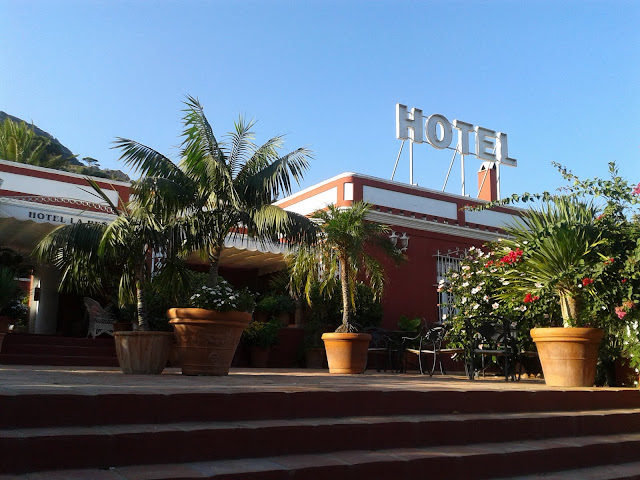
It was about 5pm when we checked into the Hotel Le Pena on the coast road just outside Tarifa. A raven flew over as we made our way to our rooms. After half an hour or so to sort out our gear we all met up again for an evening walk. We found stonechat and zitting cisticola along the hotel’s drive, and house and (possible) Spanish sparrows in the surrounding fields. Lots of cattle egrets passing over on their way to their roost.

We returned to the hotel to get ready for our evening meal, which we took at a nearby hotel/restaurant.

Bob's Day 1 Blog

Andalucia – Day 7 Sierra de las Nieves and Gaucin

Sat 31 May 2014

Sierra de las Nieves

As this was our last day in Spain, we decided to have a shorter day so that we could do some sight-seeing in Gaucin in the afternoon. We drove about 30km to the north-east to Sierra de las Nieves Natural Park. This is high up in the mountains; all of today’s birding was above 1,000m.

Our first stop was at an open picnic area near the entrance to the park. The first sighting was of a Hoopoe as we parked the car. Great tit and Long-tailed tit were a couple of common species that we had not ticked as yet this week. A Cuckoo called from the forest, and after a few moments searching we managed to get a view of it in our ‘scopes. A stone drinking trough was attracting many birds down to drink, notably Spotted flycatcher and Crested tit.

We drove on further into the park until the track became too rough for our hired Seat Altea to go any further. We continued on foot, firstly through woodland, and then through more open, rocky terrain. Blackcap, Robin and Bonelli’s warbler were singing and a fine Subalpine warbler showed well to David and me. A Griffon vulture and a Booted eagle glided over and at last we found a Peregrine. In some flatter heathland near a farmstead were Linnet, Corn bunting, Stonechat and Northern wheatear. Fledgling Dartford warblers sat on a wire fence begging food from their parents.

The track lead us higher into pine forest where we stopped by a small stream hoping to see birds coming down to drink. In the tall pines we found Firecrest, Nuthatch, Coal tit and, soaring over the canopy, our only Sparrowhawk of the trip.

Retracing our steps back to the car we saw the stonechats and Dartford warblers again, along with Melodious and Spectacled warblers. We drove back to the picnic area and had lunch at one of the tables.

On the drive home we stopped at the cafe high on the Ronda road again, hoping to see some eagles. All we managed to spot were a Short-toed eagle and Griffon vulture in the far distance.

Gaucin

Back in Gaucin the three of us wandered up to Castillo del Aguila (Eagle Castle) in the late afternoon sunshine. This medieval castle sits on a promontory above the village and we enjoyed magnificent views of the village and surrounding mountains, and down towards Gibraltar and the coast 40km away.  A nice relaxing way to end our birding tour of Andalucia.

See also Bob’s Wingspan blog for Day 7.

Today’s List

 
Griffon Vulture Eurasian Sparrowhawk
Booted Eagle Peregrine
Woodpigeon Cuckoo
Swift Hoopoe
Woodchat Shrike Jay
Red-billed Chough Coal Tit
Crested Tit Great Tit
Blue Tit Wood Lark (h)
Long-tailed Tit Western Bonelli’s Warbler
Melodious Warbler Blackcap (h)
Dartford Warbler Spectacled Warbler
Subalpine Warbler Firecrest
Wren Blackbird
Robin Stonechat
Northern Wheatear Black Wheatear
Spotted Flycatcher Chaffinch
Goldfinch Linnet
Corn Bunting Cirl Bunting
36 Species  
 
Click here for the week’s full list
            

This is the list of butterflies we saw during the week (compiled by Alan Strachan).

Scarce Swallowtail Large White
Small White Bath White
Clouded Yellow Berger’s Clouded Yellow
Black Veined White Cleopatra
Small Copper Lang’s Short-tailed Blue
Brown Argus Monarch
Painted Lady Grayling
Meadow Brown Gate Keeper
Spanish Gatekeeper Small Heath
Speckled Wood Wall Brown
Southern Gatekeeper Common Blue
Small Skipper Rock Grayling
Spanish Marbled White Red Underwing Skipper
Knapweed Fritillary Moroccan Orange-tip
Sage Skipper Large Tortoiseshell
Lulworth Skipper Queen of Spain Fritillary
Marsh Fritillary Dusky Meadow Brown
Dusky Heath Holly Blue
Brimstone Large Skipper
Small Tortoiseshell Adonis Blue
Spanish Chalk Hill Blue Silver Studded Blue
42 Species  

Andalucia – Day 6 Around Jerez de la Frontera

Fri 30 May 2014

We travelled about 100km west today to explore the area around Jerez de la Frontera. We noted a dozen or so species as we travelled, including Glossy ibis, Black kite and Raven (any large black corvid is almost certainly a raven as carrion crow and rook are absent from this region). A Sardinian warbler darted across the road in front of the car, an unfortunate habit that leads to the demise of many.

Laguna de Medina Natural Park

We arrived just after 9.00 am and began a walk on a boardwalk/cycle track along the southern edge of the lake, leading eventually to a nice hide overlooking this large (120ha) body of water. We found a good selection of warblers (Reed, Great reed, Cetti’s, Melodious, Sardinian, Zitting cisticola) in the reeds and trees along the track. Bob glimpsed a Penduline tit, but despite standing and searching for some time, it never showed again. On the lake itself were Great crested grebe, Little grebe, Mallard and Pochard.  From the hide we had very distant views of Night herons and a Purple swamphen in the vegetation on the far side of the lake. A Purple heron flew over.

As we drove away to our next port of call another ocelated lizard ran across the road in front of us. Whilst driving on to Laguna Juncosa we kept a particular eye our for Magpie as they are rare in this corner of Spain. We spotted one on top of a roadside telegraph pole.

Laguna Juncosa

We stayed here for just twenty minutes as there was not a great deal of birdlife about. The two best were a male Montagu’s harrier and a Tawny pipit. Black-winged stilt, Black-tailed godwit, Ringed plover, Swift, Mallard, Little grebe, Shelduck and Zitting cisticola made up the rest of the list.

Salinas de Bonanza (Bonanza Saltpans)

The shallow evaporation ponds held good number of Greater flamingo, as well as a few Avocet, Sanderling, Kentish plover and Ringed plover. An elegant new gull species for me was the Slender-billed variety.

We pulled up by a small pumping station in a corner of one of the lagoons where we ate our picnic lunch and watched a Little tern hovering low over the water and plunging to catch fish. A Little egret posed for photographs nearby and a Slender-billed gull also floated on the water close to us. Glossy ibis and Flamingo treated us to a fly past.


Laguna Tarelo

Only a stone’s throw from our previous stop, this lake held some interesting birds. A good selection of ducks – Pochard, Red-crested pochard, Mallard, Gadwall and White-headed. On an island in the lake were Spoonbill, Little and Cattle egrets and Squacco herons. Several young Squacco herons (probably from more than one family) scrambled in the vegetation begging food from the adults. An interesting insect on the wire fence was a Migratory grasshopper. A male Little bittern perched in the trees across the lake showed well for a couple of minutes before flying off and disappearing. Best of all were a few Marbled ducks swimming in and out of view amongst the lakeside vegetation. We eventually counted a total of eight. Others were Coot, Moorhen, Little grebe, Yellow-legged gull and and overflying pale morph Booted eagle.

Pinar del la Algaida

We drove through this umbrella pine forest but saw little. A ten-minute stop only produced a Spotted flycatcher and Sardinian warbler. Griffon vulture and several Black kites soared over the canopy of trees, amongst them a solitary Red kite - the only one we saw during the week.


Trabujena Salt Marsh

Our final site before beginning the long journey back to Gaucin. We drove slowly through this area, specifically to find Lesser short-toed lark. I spotted a Purple swamphen sat on the bank of a small pond by some farm buildings that Bob dismissed as a chicken! As we passed and Bob got a better view he conceded that it was a Purple swamphen – the best view I had of one during the week. As we drove slowly along the track we saw only Crested larks and Yellow wagtails. A Back kite perched on a fence post and a Woodchat shrike on the wire. A large flock of Black-tailed godwit and good numbers of Avocet were across the marsh. We failed to find any Lesser short-toed lark.

In the late evening relaxing on the roof terrace we watched many swift, and the odd pallid swift, screaming over the roof tops of Gaucin, and of course, the pair of blue rock thrush.

See also Bob’s Wingspan blog of Day 6.

Today’s List

 
Shelduck Gadwall
Mallard Marbled Duck
Red-crested Pochard Pochard
White-headed Duck Little Grebe
Great Crested Grebe Greater Flamingo
White Stork Glossy Ibis
Eurasian Spoonbill Little Bittern
Black-crowned Night Heron Squacco Heron
Cattle Egret Grey Heron
Purple Heron Little Egret
Red Kite Black Kite
Griffon Vulture Marsh Harrier
Montagu’s Harrier Booted Eagle
Common Kestrel Purple Swamphen
Moorhen Eurasian Coot
Black-winged Stilt Pied Avocet
Ringed Plover Kentish Plover
Black-tailed Godwit Sanderling
Collared Pratincole Slender-billed Gull
Yellow-legged Gull Lesser Black-backed Gull
Little Tern Turtle Dove
Collared Dove Swift
Pallid Swift Hoopoe
Woodchat Shrike Jay
Common Magpie Jackdaw
Common Raven Penduline Tit (Bob only)
Crested Lark Red-rumped Swallow
Cetti’s Warbler Great Reed Warbler
Reed Warbler Melodious Warbler
Zitting Cisticola Sardinian Warbler
Spotless Starling Nightingale
Stonechat Blue Rock Thrush
Spotted Flycatcher Yellow Wagtail
Tawny Pipit Greenfinch
Goldfinch Corn Bunting
70 Species  

Andalucia – Day 5 North-east of Ronda

Thurs 29 May 2014

Today we headed north beyond Ronda for a day at higher altitudes. The rain of yesterday had cleared to make way for a day of perfect summer weather.

Mountain Road to Ronda (Elevation 1,000m)

At a couple of quick stops as we travelled we found Black wheatear, Rock sparrow and Blue rock thrush. We at last managed to connect with a Rock bunting that had eluded us up till now. Well worth the wait!

Road between Ronda and Campillos

Another short stop at some cliffs to look for Bonelli’s eagles. The eyrie contained two well grown nestlings, but no sign of the adults.

Teba Bird Observatory

We spent half-an-hour here looking up at the high cliff where Griffon vulture soared on the mountain thermals. We hoped to find Peregrine, but no luck. Red-billed chough, Kestrel and lots of Alpine swift and Crag martin – two more new species for our week’s list.

Arable Farmland close to Laguna Dulce, Campillos

We drove along a farm track to a point overlooking the laguna, keeping our eyes peeled for Montagu’s harrier. We spotted one which gradually made its way closer to us, eventually passing us no more than 25m away. A fine male – what a stunning bird! Why did I not have my camera ready?!

On the lake we could see Mallard, Pochard, Great crested and Black-necked grebes, and Gull-billed tern, Whiskered tern and Yellow-legged gull in the air over the lake. We could hear the raucous song of Great reed warbler and soon located a couple of birds in the top of the reeds.  Over the arable land we bagged Lesser kestrel, Calandra and Crested larks, Swift, Swallow, a distant Black kite and a solitary Little-ringed plover flew over us. A fine Yellow wagtail was on the track.

Laguna Dulce, Campillos

Laguna Dulce from the farm trackWe retraced our route back along the farm track and drove around to Laguna Dulce itself. From the hide overlooking the lake we had closer views of most of the species we had seen from the farm track plus a few others such as Greater flamingo, Black-winged stilt, White-headed duck, Marsh harrier and Red-crested pochard. David had a close view of a Purple swamphen, but it never re-emerged for any of the rest of us to see. We spotted Northern lapwing and Black-headed gull without thinking much of them, until Bob saw them as well and pointed out that these were unusual records for this part of the world. We took a break for lunch on the picnic tables before going back for a few more minutes at the hide. A Purple swamphen was hiding in some distant reeds, but it was barely recognisable. 

Laguna de Fuente de Piedra

This huge lake holds thousands of breeding Greater flamingoes, but they were far off shore and the heat-haze made them difficult to see in ‘scopes. Other waders that we managed to see a little closer were Black-tailed godwit, Avocet, Redshank and Lapwing.
 

A nice view of a Melodious warbler singing atop a nearby shrub and lots of Gull-billed terns. We treated ourselves to an ice-cream from the visitor centre before moving on.


On the way back to Gaucin we stopped briefly at Teba Bird Observatory again. Chough, Griffon vulture and lots of Alpine swifts, but still no sign of a Peregrine.

Gaucin Sweet Chestnut Woods

In the chestnut woods we found Nuthatch and Great spotted woodpecker and heard Bonelli’s warbler and Chiffchaff. At last we managed to find a Short-toed treecreeper, a species that we had been struggling to find. Short-toed eagle and dark morph Booted eagle soared over the woods.


Before going out for dinner we watched Swift and an occasional Pallid swift from the rooftop terrace. On the roof terrace in the twilight after dinner the pair of Blue rock thrush appeared again.

See also Bob’s Wingspan blog for Day 5.

Today’s List

 
Shelduck Gadwall
Mallard Shoveler
Red-crested Pochard Pochard
White-headed Duck Little Grebe
Great Crested Grebe Black-necked Grebe
Greater Flamingo Black Kite
Griffon Vulture Short-toed Eagle
Marsh Harrier Montagu’s Harrier
Bonelli's Eagle Booted Eagle
Lesser Kestrel Common Kestrel
Purple Swamphen Moorhen
Eurasian Coot Black-winged Stilt
Pied Avocet Northern Lapwing
Little Ringed Plover Black-tailed Godwit
Redshank Black-headed Gull
Yellow-legged Gull Gull-billed Tern
Whiskered Tern Alpine Swift
Swift Pallid Swift
Hoopoe Great Spotted Woodpecker
Woodchat Shrike Red-billed Chough
Jackdaw Common Raven
Calandra Lark Crested Lark
Barn Swallow Crag Martin
Red-rumped Swallow Cetti’s Warbler (h)
Common Chiffchaff (h) Western Bonelli’s Warbler (h)
Great Reed Warbler Melodious Warbler
Zitting Cisticola Sardinian Warbler
Nuthatch Short-toed Treecreeper
Spotless Starling Blackbird (h)
Black Wheatear Blue Rock Thrush
Spotted Flycatcher House Sparrow
Rock Sparrow Yellow Wagtail
Chaffinch Goldfinch
Linnet Rock Bunting
Corn Bunting  
69 Species  

Andalucia – Day 4 La Janda

Wed 28 May 2014

We travelled south-west today for some lower-level birding away from the mountains. The day started wet and windy, but it did improve later.

Marchenilla Track, Near San Pablo

This dusty country road is only 10km from Gaucin and was visited specifically for Rufous bush robin and Tawny pipit. We spotted two Little owls en-route and, more excitingly, a couple of Black-winged kite flew across the road in front of us. Sadly not a great view, we only really saw the birds in silhouette gliding with their wings held in their characteristic deep V-shape.

After parking the car we began a gentle walk along the track and it wasn’t long before the target Rufous bush robin appeared. What a cracker, and our luck got even better when a second bird showed. An unusual looking sparrow sat on a fence caught my eye. Bob identified it as an Italian sparrow; a Spanish/house sparrow hybrid, considered by some authorities as a separate species.

A bit further along we found our second target species, Tawny pipit. This also afforded us good views from its perch on electricity wires. A small flock of Bee-eaters could be seen in a tree across the fields, and a fine Melodious warbler showed on a fence. Notable birds that did a fly past were Short-toed eagle, dark morph Booted eagle, Buzzard and White stork.

Tarifa – Playa de los Lances

We had to put on our waterproofs here as it was raining as we parked up. As we walked along the boardwalk out to the beach front hide Short-toed lark performed their short song flights, but there was not much else about on the beach, only a few Yellow-legged gull, Ringed plover, Kentish plover, Dunlin and Little egret. After twenty minutes we gave up because of the horrible weather and went for a coffee in a nearby hotel.

La Janda

It continued to rain quite heavily as we drove on to La Janda, but the worst had passed by the time we arrived. This is a large wetland area, but much of it has been “improved” for rice growing. We drove slowly along a track with flooded fields on either side. Lots of Cattle and Little egrets, Glossy ibis and White stork. We got out of the car to scan across an area of water with our ‘scopes and added Night heron, Spoonbill, some distant Collared pratincole and an even more distant Marsh harrier. An Egyptian mongoose ran across the track in front of us.
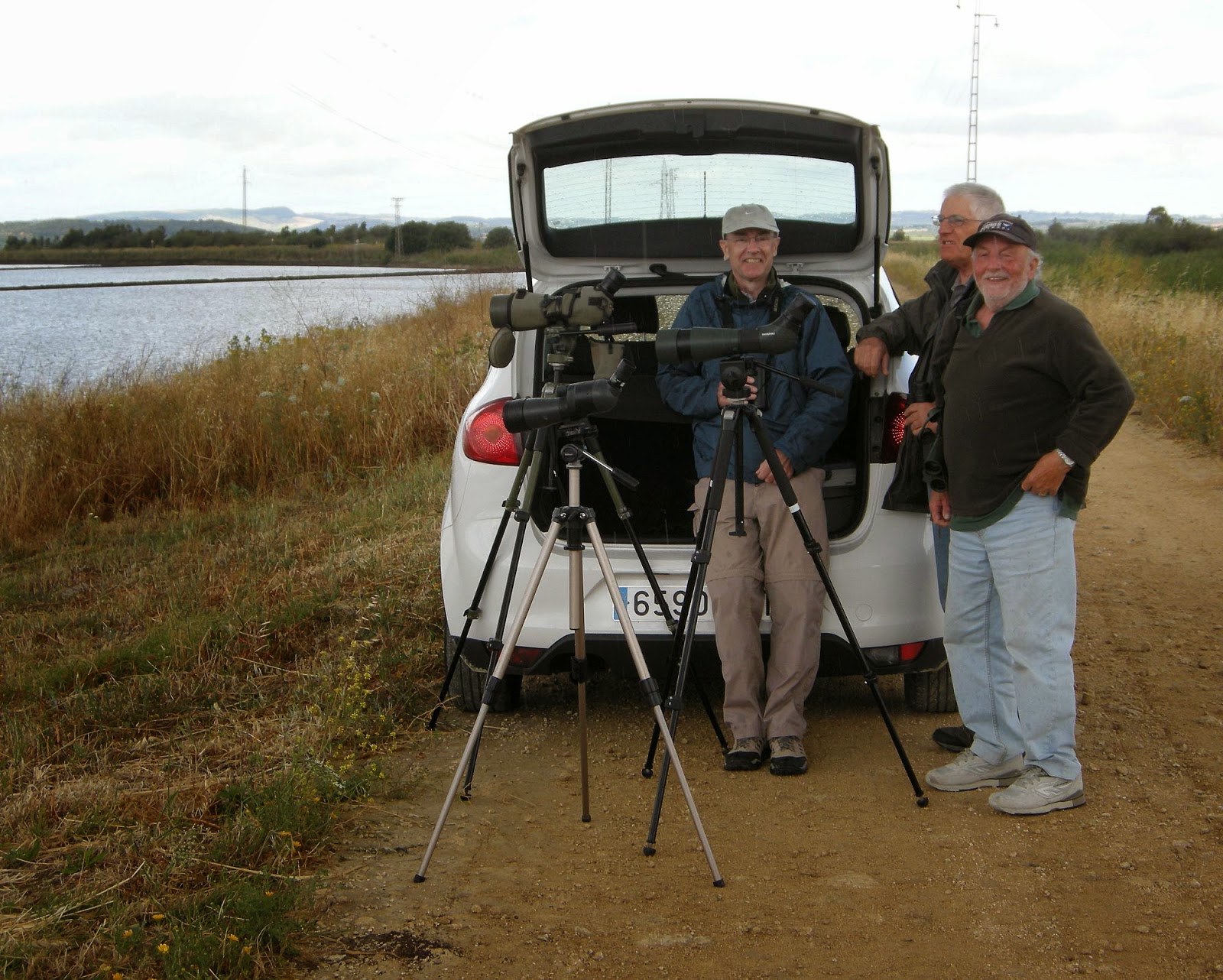
The road turned right to continue in a straight line for a few hundred metres. The white poplar trees along the left hand side were full of nesting Cattle egrets – hundreds of them. The car became a mobile hide allowing us great close views of them. Many Glossy ibis were also nesting amongst the egrets . A fantastic sight!


Once beyond the egret/ibis colony we stopped to eat our sandwiches, the rain having now cleared away. Reed and Cetti’s warblers were singing from somewhere in the bushes and Turtle doves sat on wires.

We drove onwards until we arrived at a few farm buildings were we stopped to look at half-a-dozen Black kites soaring low over the farm. As we continued through the farm a Little owl sat very photogenicly on a gate post. We followed the track for another two or three kilometres past more lagoons and finally to a woodland where a pair of Spanish Imperial eagles are breeding, but no sign of them above the trees. We turned the car around and began to retrace our route. A group of large birds high to our left caught our attention. We stopped to check them out and amongst the Griffon vultures were two Spanish Imperial eagles. An exciting find.

As we drove back through the farm the Little owl was back on its perch and obligingly allowed us to take more photographs. We followed the track back past the Cattle egret/Glossy ibis and finally out onto the main road. An ocelated lizard (one of the larger species) scuttled across the track at the end of the track.

Vejer de la Frontera

We called into this small town specifically to see the nesting colony of Bald ibis on rocky cliffs right next to the road. There were several well grown youngsters in the nests as well as the adults. But my, what an ugly bird!

Barbate Marshes

A large shallow lagoon near the coast that held Kentish plover, Spoonbill, Black-winged stilt, Lesser black-backed gull, Yellow-legged gull, Grey plover, Greater flamingo, Avocet and Little tern. We had excellent close views of Collared pratincole as they stood on the sandy track. Calandra lark, Stone curlew, Short-toed lark, Crested lark and Yellow wagtail (blue headed variety) were nice species in the surrounding grassland.

Mirador del Estrecho (Near Tarifa)

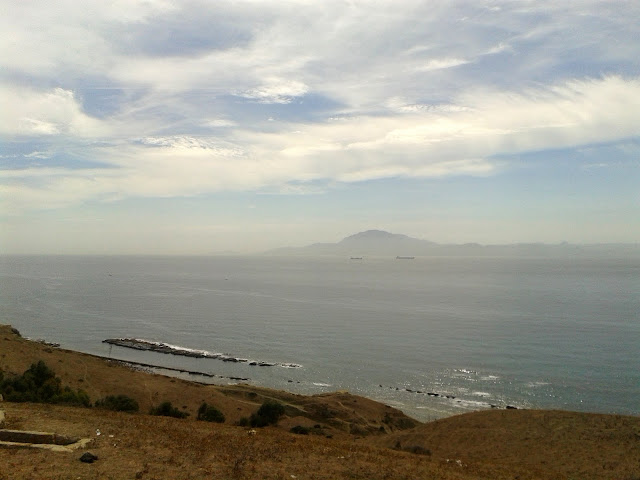
We stopped at this viewpoint to check if any late migrants were flying in from Africa. We did not see any, but the views across the Straits of Gibraltar to Morocco were very impressive.

Gaucin

Ended the day being serenaded by the Blue rock thrush singing from the rooftops of Gaucin.

See also Bob’s Wingspan Blog for Day 4.

Today’s List

 
Pheasant Mallard
Greater Flamingo White Stork
Northern Bald Ibis Glossy Ibis
Eurasian Spoonbill Black-crowned Night Heron
Cattle Egret Grey Heron
Little Egret Black-winged Kite
Black Kite Griffon Vulture
Short-toed Eagle Marsh Harrier
Common Buzzard Spanish Imperial Eagle
Booted Eagle Common Kestrel
Moorhen Stone-curlew
Black-winged Stilt Pied Avocet
Grey Plover Ringed Plover
Kentish Plover Dunlin
Collared Pratincole Yellow-legged Gull
Lesser Black-backed Gull Little Tern
Turtle Dove Little Owl
Swift European Bee-eater
Great Spotted Woodpecker Woodchat Shrike
Jackdaw Calandra Lark
Short-toed Lark Crested Lark
Skylark Barn Swallow
House Martin Cetti’s Warbler (h)
Reed Warbler Melodious Warbler
Zitting Cisticola Sardinian Warbler
Blackbird Nightingale
Rufous Bush Robin Stonechat
Blue Rock Thrush House Sparrow
Italian Sparrow Yellow Wagtail
Tawny Pipit Serin
Greenfinch Goldfinch
Linnet Corn Bunting
64 Species  

Andalucia – Day 3 Mountains South-west of Ronda

Tues 27 May 2014

We headed off towards Ronda for today’s birding. A short stop to check out a Rock sparrow sat on the roadside wall also produced a Subalpine and Melodious warbler. At a second stop we found a Black wheatear high up on the crags above the road and a Red-rumped swallow swooped below us.


Encinas Borraches Track

The track at Encinas Borraches was the first planned location. Bob intended this to be a visit of about an hour, but it we found such good birds here, we ended up staying for three. 

Both Crested and Thekla lark were bagged before we had even opened the gate to start walking the track. A few minutes scanning the area near to the farm buildings/pond produced Stonechat, Corn bunting and Little owl, but no sign of Southern grey shrike that Bob expected to find here. Red deer were high up on the rocky hillside.

A Black-eared wheatear was the first of several new species for me – a very fine looking bird. The sweet song of a Woodlark caught our attention, but it was some time before we eventually spotted the bird. A Cuckoo called from somewhere further down the valley and a Woodchat shrike perched in the top of shrubs. More mundane birds were Stonechat and Red-legged partridge. Black-veined white and Sage skipper butterflies excited Alan. The next new tick for me was Spectacled warbler; not just one, but a family party flitting around in some low shrubs. As we continued along the track two more warbler species were heard and eventually seen after some patient waiting - a Western Orphean warbler (another new tick for me) and Subalpine warbler. A Western Bonelli’s warbler was the last bird added before we turned to walk back. Golden oriole and Hoopoe were heard but not seen.


As we walked back David spotted a bird sat on a distant pylon which at first we thought was a Blue rock thrush, but once we had it in our ‘scopes we realised it was a Rock thrush - the find of the day. Nearing the car we at last found the Southern grey shrike that had eluded us earlier. After scoffing our sandwiches back at the car an interesting assortment of butterflies that were finding something nutritious on a cow-pat by the gate caught our attention.

Ronda

We moved on and stopped for coffee at a high mountain road which was allegedly a good spot for eagles. We sat with coffee for half-an-hour but did not see any eagles.

Bob left us in Ronda for twenty minutes of sight-seeing at the bridge, from where we found Chough, Pallid swift, Lesser kestrel, Feral pigeons and admired the wonderful views.

Montejaque Cork Woods

We pressed on to a cork oak forest near Montejaque. Firecrest was the best find here, and a red deer paddling in a small lake, which soon took cover in the trees when it spotted us. We looked carefully for Treecreeper, but without success.


Llanos de Libar

We headed up into a high mountain valley at Serrania de Ronda/Llanos de Libar for the final birding of the day. Rock bunting was the target species. At the first place we stopped only for five minutes as it was very windy, seeing only Griffon vulture, Corn bunting, Goldfinch and Sardinian warbler.

We moved a little further and higher and found Blue rock thrush, Black redstart and a Spanish ibex that looked down on us from the summit of a mountain across the valley. A Short-toed eagle flew over, as did a Raven. As we drove back down the mountain road we found Rock sparrow and Linnet drinking at a tiny pond and Black-eared wheatear perched on a lichen covered rock. Rock bunting remained elusive.

Fine views of the local Blue rock thrush on the rooftops of Gaucin in the evening.

See also Bob’s Wingspan blog for Day 3.

Today’s List

 
Red-legged Partridge Griffon Vulture
Short-toed Eagle Lesser Kestrel
Common Kestrel Rock Dove / Feral Pigeon
Woodpigeon Cuckoo
Little Owl Swift
Pallid Swift Kingfisher
Hoopoe Southern Grey Shrike
Woodchat Shrike Golden Oriole
Red-billed Chough Common Raven
Crested Lark Thekla Lark
Wood Lark Barn Swallow
Red-rumped Swallow Western Bonelli’s Warbler
Melodious Warbler Western Orphean Warbler
Spectacled Warbler Subalpine Warbler
Firecrest Blackbird
Nightingale Black Redstart
Stonechat Black-eared Wheatear
Black Wheatear Rock Thrush
Blue Rock Thrush Spotted Flycatcher
House Sparrow Rock Sparrow
Chaffinch Serin
Goldfinch Linnet
Corn Bunting  
45 Species  

Andalucia – Day 2 South to Algeciras

Mon 26 May 2014

I awoke to the song of a Blue rock thrush, and once I had washed and shaved, I took a cup of tea out onto the roof terrace and saw this handsome thrush sat on a nearby chimney (starting the day with another new species for me).

Near Gaucin

After breakfast in Bob’s house we headed off for the first full day’s birding. We pulled off the road just outside Gaucin to look at some birds of prey that had caught our eye – three Honey buzzard on their northward migration. In the distance towards Gibraltar another large bird was picked out in binoculars. We thought it might be a Black stork, but we could not locate it again in our ‘scopes.

A little way further from Gaucin we spent a pleasant hour walking along a track by the shallow Rio Genal. More Honey buzzard were flying over as we began and we heard Nightingale and Turtle dove. Male and female Blackcaps showed well, and down by the water both Grey and White wagtails were seen. From the finch family we saw Chaffinch, Greenfinch and Serin and of warblers Sardinian and Cetti’s. We spent a while observing a couple of interesting butterflies. A Jay flew across the river and a Golden oriole, initially heard singing, eventually showed itself as it flew between trees. More birds of prey – Buzzard, Short-toed eagle and dark morph Booted eagle. The drumming of a Great spotted woodpecker came from not too far away and finally a Raven circled high above us.

River Guadiaro

We drove on, heading for the River Guadiaro, but we stopped a couple of times before getting there to see Crested lark, Woodchat shrike, another pale morph Booted eagle and possibly a Thekla lark.

At the River Guadiaro things were a little quiet. A Turtle dove and a Bee-eater sat close together on a wire in the distance on the other side of the river. A few Swallows made some low-level passes over the water and on the exposed shingle were one or two Little-ringed plover. Bob called an Alpine swift, but I am not sure if anyone else managed to spot it. A pale morph Booted eagle circled overhead giving some superb views. A Bath white butterfly was also a nice find. Goldfinch, Greenfinch, Corn bunting and Stonechat were added as we strolled back to the car, along with a fine female Sardinian warbler.

We moved a short distance to another spot on the same river, stopping en-route to try to get a better view of an Egyptian vulture. Unfortunately it disappeared behind a low hill not to be seen again.

The target species at this section of the river was Western Olivaceous warbler, as this was a known breeding site. Nightingale and Cetti’s were heard, and a small flock of Yellow-legged gulls lazed on a spit of shingle in the river. A likely scratchy warble from a low bush turned out to be a Sardinian warbler. Little egret, Common sandpiper and Little-ringed plover sat on the opposite bank of the river. After a some time searching we eventually found and had a good view of the Western Olivaceous warbler (listed as Isabelline warbler by some sources). Other species seen were Cirl bunting, Serin and White wagtail.

San Enrique Woods

We moved on to San Enrique Woods where we munched our sandwiches stood by the open boot of the car. Alan mentioned that that he would very much like to see a Wryneck, and no sooner had he said this than one began calling nearby. It almost immediately appeared and perched, continuing to call, above us. It moved back and forth between two trees, calling excitedly all the time, and allowing us great views. A griffon vulture cruised past and we found tree sparrows from the nearby breeding colony. A Monarch butterfly wafted around in a clearing. Once we had finished our lunch we walked a short distance into the deciduous wood, consisting mainly of white poplar. Here we saw jay, a family party of Spotted flycatcher, Chaffinch and White wagtail and heard Hoopoe and Great spotted woodpecker. We failed to find Short-toed treecreeper, though we thought we heard one.

Pinar del Rey Pinewoods

There were lots of White stork sitting in the nests on various poles and pylons as we travelled on to our next destination, Pinar del Rey pinewoods. Chaffinch, Blackcap and Bonelli’s warbler were heard and eventually spotted. Crested tit was another nice find. I located a small warbler whose song include phrases similar to a Chiffchaff, but with additional non-chiffchaff motifs. Bob identified this as an Iberian Chiffchaff. A scratchy warble that sounded a bit like a Whitethroat, though longer, was another Sardinian warbler. Finally, a Cleopatra butterfly was added to our insect list.

Polmones

The day’s last stop was at Polmones beach (near Algeciras). Not many species added here, but Kentish plover on a sand bar about 100m offshore was a good one. On the same sand bar were Black-headed and Yellow-legged gulls, Sandwich tern, Little plover and a blue-headed (Iberian race) Yellow wagtail.

On the journey back to Gaucin we stopped to look at a Lesser kestrel nest site in the structure of a railway bridge. One of the birds was on a telegraph wire, but it flew off as we drove past. We did see a couple of the birds in the distance, and one disappeared into the nest hole but did not not re-appear. A Melodious warbler showed briefly in the hedgerow.

See also Bob’s Wingspan blog for Day 2.

Today’s List

 
Mallard Little Grebe
White Stork Little Egret
European Honey Buzzard Egyptian Vulture
Griffon Vulture Short-toed Eagle
Common Buzzard Booted Eagle
Lesser Kestrel Common Kestrel
Moorhen Ringed Plover
Little Ringed Plover Kentish Plover
Common Sandpiper Black-headed Gull
Yellow-legged Gull Sandwich Tern
Woodpigeon Turtle Dove
Swift European Bee-eater
Hoopoe Wryneck
Great Spotted Woodpecker Woodchat Shrike
Golden Oriole Jay
Common Raven Crested Tit
Great Tit Blue Tit
Crested Lark Thekla Lark
Barn Swallow Cetti’s Warbler
Iberian Chiffchaff Western Bonelli’s Warbler
Western Olivaceous Warbler Melodious Warbler
Zitting Cisticola Blackcap
Sardinian Warbler Spotless Starling
Blackbird Robin
Nightingale Stonechat
Blue Rock Thrush Spotted Flycatcher
House Sparrow Tree Sparrow
Yellow Wagtail Grey Wagtail
White Wagtail Chaffinch
Serin Greenfinch
Goldfinch Corn Bunting
Cirl Bunting  
63 Species