Wed 8 May 2013
I rose early to go for a walk along the lane near the hotel. All the usual birds were singing as I wandered slowly along. I had not gone far when I bumped into Steve  on his way back. Steve had seen a hawfinch and together we found a nuthatch and saw golden oriole chasing around in the foliage. We encountered a woodpecker, which on close inspection turned out to be a Syrian. The differences between this and great spotted are subtle. The most obvious is the white gap in the black neck-band, and its call was slightly softer than the harsh kick of the great spotted.
 on his way back. Steve had seen a hawfinch and together we found a nuthatch and saw golden oriole chasing around in the foliage. We encountered a woodpecker, which on close inspection turned out to be a Syrian. The differences between this and great spotted are subtle. The most obvious is the white gap in the black neck-band, and its call was slightly softer than the harsh kick of the great spotted.
 Nosvaj
The second pre-breakfast visit of the week to this woodland (though not the same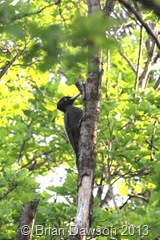 spot as on Monday). We had not gone far when the shrill flight call heralded the arrival of a black woodpecker. It perched on a tree trunk allowing us good views. Red-backed shrike and hawfinch were seen, and a short-toed treecreeper located from its song. We played a recording of middle spotted woodpecker in the hope of attracting one, but without success.
spot as on Monday). We had not gone far when the shrill flight call heralded the arrival of a black woodpecker. It perched on a tree trunk allowing us good views. Red-backed shrike and hawfinch were seen, and a short-toed treecreeper located from its song. We played a recording of middle spotted woodpecker in the hope of attracting one, but without success.We crossed the road to explore more woods. After patiently watching and waiting in a clearing for several minutes two lesser spotted woodpeckers eventually showed up, and then a middle spotted put in an appearance as well. Oh, and we saw a hoopoe too!
Kerescend Sewage Works
Our first port of call after breakfast was to these sewage works. Lesser whitethroat, corn bunting and greenfinch were singing as we arrived. We had not walked far when we stumbled upon a small flock of bee-eaters sat in the top of low shrubs. They soon flew off, maybe because of the Saker falcon that flew across in the middle distance. Buzzard, marsh harrier and kestrel were also around and in the bushes a whitethroat was delivering its scratchy warbled song. A water rail and the unmistakable racket of a great reed warbler were heard and finally, and less impressively, a pheasant was spotted.
As we pressed on we stopped for five minutes at a closed down hotel to take a look at the souslik (aka European ground squirrel, and a favourite meal of Saker falcon) that had made their homes in the lawns.
Another hotel/restaurant complex with a small lake afforded us great views of a very tame black-crowned night heron, which was content to pose no more than three metres away from us as we photographed it. It seemed more interested in the extremely large carp that was surfacing next to the platform it was sat on. The heron definitely had eyes bigger than its stomach as the fish looked big enough to swallow the bird! A squacco heron was patrolling along the far side of the lake, but close enough for fine views. We found another wryneck for Brenda.


Across the road from the hotel, a reed bed next to a fishing lake held sedge, Savi’s, reed and great reed warblers. A cuckoo was calling from some electricity cables and Roy spotted bearded reedling on distant reeds. We thought we heard the call of penduline tit in the willow trees, but we did not see it. Another night heron was on the lake.
Tiszaörvény
After a coffee stop we visited this spot on the east bank of the River Tisza. A long, straight walkway over a reedy pond afforded good views into the reeds, but the hoped for little bittern did not materialise. A reed warbler flitted amongst the stems  and a great reed warbler delivered its raucous song from the tops of the reeds. Without doubt the best find here was a penduline tit. It was collecting the downy seeds of willow and bulrush and then flying, usually under the walkway we were stood on, across the pond to a stand of trees where, we assumed, it was busy constructing its nest. We watched for several minutes as it made numerous return trips. As we were leaving a female cuckoo flew silently over the reeds and dropped down into them, presumably to deposit an egg in an unsuspecting reed warbler’s nest.
 and a great reed warbler delivered its raucous song from the tops of the reeds. Without doubt the best find here was a penduline tit. It was collecting the downy seeds of willow and bulrush and then flying, usually under the walkway we were stood on, across the pond to a stand of trees where, we assumed, it was busy constructing its nest. We watched for several minutes as it made numerous return trips. As we were leaving a female cuckoo flew silently over the reeds and dropped down into them, presumably to deposit an egg in an unsuspecting reed warbler’s nest.
Near Egyek
Travelling on a dusty track in the Hortobágyi park we stumbled upon a group of waders on a tiny wet area. There were several wood sandpipers and a single curlew sandpiper, but they were spooked by our presence and quickly flew off.
 waders on a tiny wet area. There were several wood sandpipers and a single curlew sandpiper, but they were spooked by our presence and quickly flew off.
Searching around farm buildings we found crested lark and several jackdaw (apparently not common in Hungary). On some open water there was quite a gathering of species – garganey, ferruginous duck, lapwing, coot, greylag, pochard, black-necked grebe, marsh harrier, whiskered tern, and white-winged tern. Around the buildings were swallow, yellow wagtail (blue headed variety), rook, wheatear, house sparrow, white wagtail, magpie, collared dove and, on the roofs, some strange ornamental pigeons.
Ároktő-Tiszacsege Car Ferry
We had lunch at a famous fish restaurant near the river. Steve continued birding while the rest of us lunched and added kingfisher and redstart to our list.
 After crossing the river on the ferry we continued on a quiet track beside the Tisza. A hoopoe flew over as we drove. We eventually arrived at a lake only partially visible through the trees. Great crested grebe and black-headed gull took second place to the group of pygmy cormorants (eleven in total) perched on posts in the water.
On the journey back to the hotel we stopped again by the pylons just south of the M3 motorway. Two birds that could have been Saker were sat on a distant pylon, but they were too far away to tell for sure. We could only use binoculars as we had pulled-up on a fairly busy road with no parking area, so it was not safe to stop long, or to get out of the minibus.
The scops owl was calling again at 9.30pm.
Species added today
| Black-necked Grebe | Pygmy Cormorant |
| Saker Falcon | Water Rail |
| Curlew Sandpiper | Kingfisher |
| Middle Spotted Woodpecker | Redstart |
| Reed Warbler | Bearded Reedling |
| Short-toed Treecreeper | Jackdaw |
| 12 Species |


